

New York 🇺🇸
6th October 2026
🕙 9:00 to 17:00 EDT
📍 Microsoft Times Square, New York
The AI Trust Forum is special. It brings together brilliant thinkers, innovators, policymakers, and practitioners to learn, build relationships, and work together personally solving AI engineering, business, legal and ethical challenges at retreats held in cities around the world. That’s why we call it a “Forum”, not a “Conference”.
free to attend
Closing date for requesting your seat: 1st October 2026. Privacy Policy.
Shaping how AI is built, trusted, and used globally.
-
Work alongside the greatest minds in AI engineering and policy.
Connect, learn, and spend quality time with brilliant people from around the world.
-
Learn from original work and research by experts in their field.
Return home with knowledge, resources, and a network of AI leaders to back you up.
-
Co-create strategy, frameworks, and tools to be used worldwide.
Executable outputs, not theory, having real influence in shaping the global standard.
Delivered with our co-hosts

Speaker highlight

Keynote
Avishan Bodjnoud
Chief, Information Management
UN Political and Peacebuilding Affairs

Keynote
Dona Sarkar
Director, AI Agent Technology
Microsoft
Who should attend the AI Trust Forum?

Business Leaders
CEOs, COOs, CFOs, CPOs, VPs and Directors responsible for driving growth, innovation and organisational change.
Gain the strategic clarity, confidence and credibility needed to prioritize AI investments and accelerate enterprise adoption.

Technology Leaders
CIOs, CTOs, CAIOs, CDOs, Enterprise Architects, Heads of Engineering and AI leaders responsible for delivering AI at scale.
Learn from peers, solve real-world engineering challenges, and explore proven patterns for building reliable, production-ready AI systems.

Governance Leaders
Chief Risk Officers, Governance Leaders, in-house counsel, ethics teams, and heads of responsible AI focused on managing AI risk.
Stay ahead of evolving regulation, strengthen governance frameworks, and learn approaches to compliance, assurance and responsible AI.

Policy Leaders
Regulators, policy makers and their staffs, policy advisors, and leaders of non-governmental organisations shaping policy.
Collaborate with industry leaders and practitioners to develop informed, practical policy grounded in real-world implementation experience.

Legal Leaders
Lawyers, legal counsel, ethics specialists and regulatory advisers navigating the fast-evolving AI regulatory landscape.
Bridge the gap between technical and legal perspectives, interpret emerging requirements, and build multidisciplinary alliances to AI challenges.
Unique, highly collaborative sessions
-
The day begins on a shared stage rather than with a single keynote, where several leaders introduce ideas that follow throughout the day.
It opens with the question the Forum exists to ask. Trustworthy AI sits at the intersection of engineering best practice, legal regulation, and human ethics. Most of the day is spent on the first two, but almost everyone building AI today is asking one of three questions: How do we build it, how do we exploit it, how do we control it? Far fewer ask what kind of organizations we intend to build with this technology, and an organization that cannot answer that has no way to judge which AI is worth the investment.
From there the morning turns practical. A live look at what changes when AI strategy and architecture stops being a document and becomes an instrument you can use, a featured keynote from a keynote from Microsoft's Director of Enterprise AI Advocacy, and an introduction to AI diligence, a discipline most leaders are already subject to without having named it.
What attendees leave with: a common vocabulary for the day, a higher bar for what counts as a hard problem, and a question about their own organization they did not arrive with.
-
Working Session A. Runs alongside the symposia. Attend both working sessions, one, or neither.
Building an agent is no longer the hard part. Keeping a population of them running inside a real organization is. This session takes on the machinery that decides whether agents survive contact with the organization's real work, and it stays deliberately platform-neutral: identity and permissions, ownership and who gets called at night, cost and consumption, observability, versioning and change control, retirement, and the problem of the agents nobody registered.
It is work rather than talk. Attendees put their own blockers on the table at the start, the group sorts them into the patterns that keep recurring, and the remainder of the time is spent building shared answers to the ones most of the room holds in common. The conversation stays at the level where it transfers, so that a bank or a public sector agency can use a version of the same answer, with each participant's specifics as the worked examples.
Nothing needs to be written on the day. The work is captured and, in the weeks that follow, published as a reference with every contributor credited as a co-author unless they prefer otherwise.
What attendees leave with: their hardest production problems worked through by a room of peers, the contacts of everyone who worked on them, and their names on the published result.
-
Description to be announced.
-
Sooner or later, someone who does not know your organization, is not inclined to trust it, and is under no obligation to be fair will ask it to prove how its AI works. AI-specific diligence frameworks are now published and in active use, among them the framework from Danny Tobey and colleagues at DLA Piper that this work takes as its starting point. The question is no longer what will be asked. It is whether the answer exists before the question arrives.
This symposium is the technologist's companion to that legal framework, drawn from original work published by the Center for Trustworthy AI. It walks the demand areas a serious questioner now covers — proprietary development, third-party AI, deployment and controls, training data and provenance, generative outputs — and then makes the argument that matters more than any checklist. Everything counsel asks for is either an artifact a well-run AI program already produces, or evidence that no such program exists. Diligence is a maturity assessment performed by strangers, under time pressure, with valuation at stake. The organization does not set the questions, choose the assessor, or pick the week.
The findings carry further than the transaction. Materiality inverts: what engineers treat as routine turns out to move price, and what keeps them up at night often does not. Documentation is an asset rather than an obligation, and its value collapses the moment it is assembled under deadline. Most AI now sits somewhere between bought and built, which is precisely where the hard questions live. And readiness cannot be manufactured once the clock has started. The session takes all three positions an organization can occupy — a live transaction, one on the horizon, and steady state, where most of the room sits today — because this pressure is no longer confined to M&A. Enterprise customers send AI questionnaires in major procurements, insurers are beginning to underwrite AI posture, and donors, auditors, and oversight offices ask the same questions on different letterhead. Most organizations will conduct this diligence more often than they undergo it. Readiness in steady state turns out to be indistinguishable from running the thing properly. This is not legal advice, and it is not a lawyer's reading of the law.
What attendees leave with: the demand areas their organization will be asked about, a way to tell whether they could answer each of them with evidence rather than assertion, and a usable structure for the questions they should be putting to their own vendors and partners.
-
Working Session B. Runs alongside the symposia. Attend both working sessions, one, or neither.
Every organization runs on context its people hold implicitly. Who decides what. What gets escalated, to whom, and how fast. What good work looks like. What is never done regardless of who asks. Almost none of it is written down, and agents inherit none of it. The Human Context Protocol is an open line of work on making that context explicit enough that mixed teams of people and agents can operate against it: leadership capabilities, decision rights, and the operating norms of teams whose members are not all human.
This is a drafting session. What is a role when part of it is performed by an agent? Where does accountability sit when the work was assembled by software and approved by a person? What must digital fluency mean now? What do regulators already expect an organization to demonstrate about the competence of its people? The work stays at the level of the protocol rather than any one sector, with participants' own situations as the test cases.
Contributions are captured and developed after the event into a published set of protocol components, distributed to everyone present, with contributors credited as co-authors unless they prefer otherwise.
What attendees leave with: a first draft for their own organization, a set of questions their leadership team has not yet been asked, and their name on the published work.
-
Building agents is no longer the hard part. The hard part is the decision to let one loose in the business, with real permissions, real money, and real customers on the other side of it. Many organizations stall at exactly that point, and they stall in similar ways. Every new agent requires senior people to reason from first principles about what it might do, who it could harm, and what happens if it is wrong. There is a hard limit on how many times a leadership team can hold that conversation, and most find it early. Which is why so many organizations that can demonstrate something remarkable can name only a handful of agents actually running.
The symposium begins from an observation that lands badly and is true. A rule written in a document cannot stop anything. It can shape how a system gets built, and a well-written one is genuinely valuable at design time, but at the moment an agent acts, something inside the running system has to allow it, refuse it, or hand the decision back to a person. We walk through what changes when an agent leaves a supervised pilot, and why testing and control are two different problems requiring two different answers. Testing tells you how a system behaved on the cases someone thought to write down. Runtime control determines what happens on the case nobody anticipated, at three in the morning, when the agent holds credentials. Expect specifics: what it means to express a rule as something a system enforces rather than something a person reads, where those checkpoints sit, what a deterministic answer looks like inside a non-deterministic system, and what should happen when the check itself fails.
The argument is about velocity rather than caution. The constraint on your AI portfolio next year will not be model capability and probably will not be budget. It will be how many things you are able to allow. Organizations that have made the approval decision reusable can say yes in an afternoon. The rest go on saying it in quarters. The same machinery, incidentally, produces a defensible answer for a board, an auditor, an insurer, or a regulator, which is a good deal of value from a decision made on commercial grounds.
What attendees leave with: a specific list of what to require before approving an agent for production, a way to tell how much of it their existing platform already provides, and a straight answer for their next board meeting.
-
The session opens with a diagnosis drawn from decades of work inside operationally complex, heavily regulated businesses. Eight symptoms, found in almost every estate. A new product needs a code release. The people who own the pricing cannot change the pricing. Work arrives as documents and leaves as typing. Six systems hold three answers to the same question. Nobody can say who changed a record, or whether they were allowed to. Twenty years of customization nobody will touch. Every partner wants something different, and none of it ever retires. The examples come from insurance. Every symptom is a property of how systems are arranged rather than how the business is run, and all of them share one cause. When systems cannot talk to each other, the business rules, the integration logic, and the reporting end up duplicated inside each of them. Substitute your own eight.
What follows is an argument about what happens when agents arrive on top of that estate. An agent that wants to act has to ask whether it may, and the question is unanswerable unless one place knows the entities, their relationships, and the authority rules on them, and one point enforces authorization, orchestration, and an immutable record of every call. Some things have to be the same every time. Systems of record can vary, the surfaces people work on can vary, and the models certainly will. The domain model and the gateway cannot. This session presents an architecture built on that principle, including the deliberate decision that audit logging and integration are not components anyone gets to select, because they are how everything else is reached.
The session closes on two questions senior leaders are already asking. Where the human decision should sit once software does the assembly and the person does the deciding, and which number to fix first, so that the next one costs less to fix than it otherwise would.
What attendees leave with: their own version of the eight symptoms, a clear test for what in their estate must be the same every time, and a sequencing argument they can take into a budget conversation.
-
Coming soon
Agenda and sessions are subject to change as our fellows (facilitators) evolve their topics.
Who you’ll work with at the Forum in New York…
-
Avishan Bodjnoud
Political and Peace Building Affairs
United Nations
-
Dona Sarkar
Director, AI Agent Technology
Microsoft
-

Andrew Welch
Executive Director
Center for Trustworthy AI
-
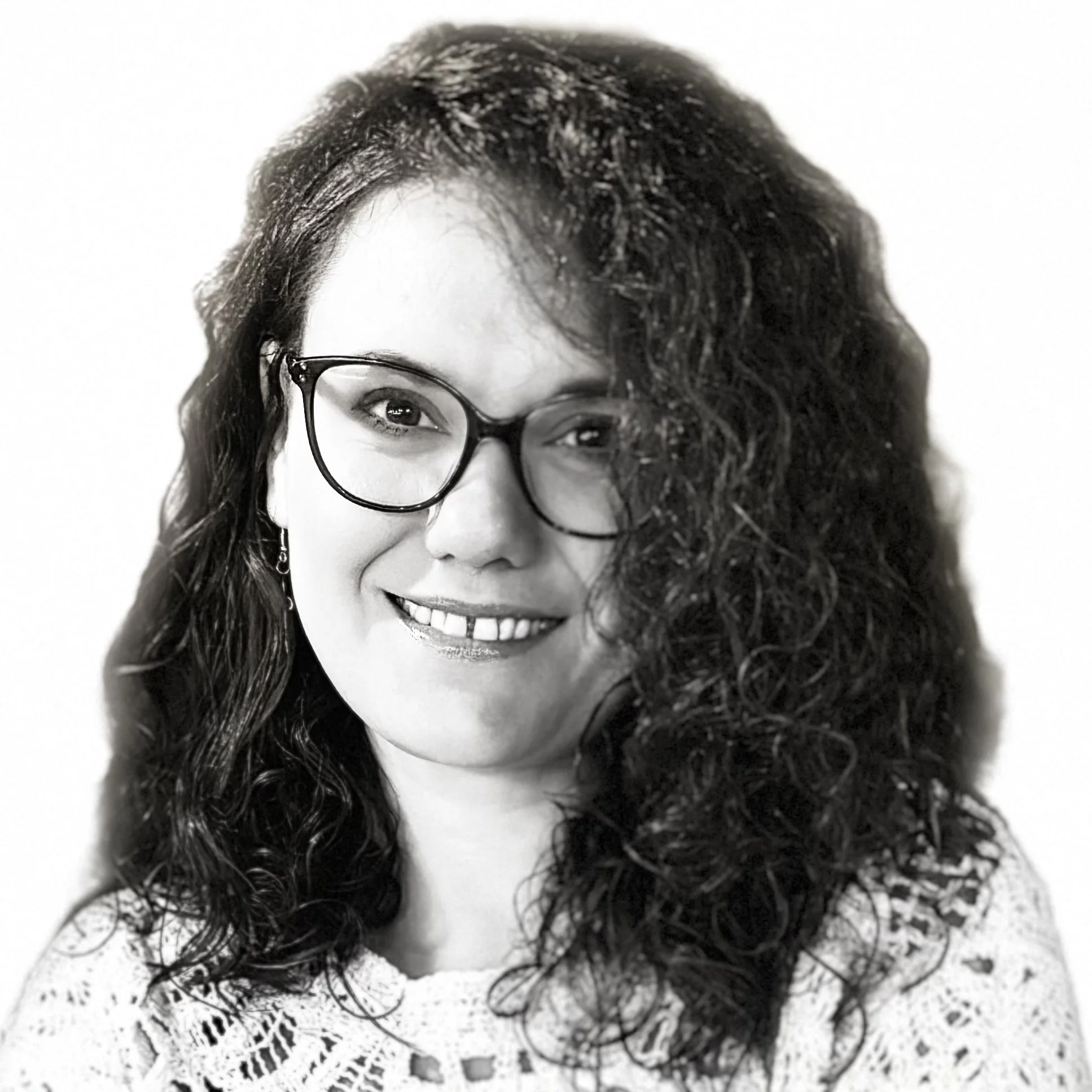
Ana Welch
Chief Technology Officer
Center for Trustworthy AI
-

Chris Huntingford
Chief AI Officer
Center for Trustworthy AI
-

Arnav Gupta
Vice President of Technology
Damco Solutions
-

Mehrnoosh Sameki
Trustworthy AI Developer Tools and Experiences Product Lead
Microsoft Core AI
Venue
Microsoft Times Square,
11 Times Square, 7th Floor
New York, NY 10036
6th October 2026
9:00 - 17:00

The Forum is coming to a city near you
Can’t join us in New York? Find another city near you.
Events are free to attend, but seats are limited. Request your seat using the links below and be part of the AI Trust Forum.
London

1 October 2026
Storey Club, Paddington
New York

6 October 2026
Microsoft Times Square, NYC
Washington, DC
October 2026
Washington, DC
Brasov

November 2026
Radisson Blu, Brasov
Hamburg

April 2027
ColorCloud 2027
Seats are reviewed on a rolling basis. Apply early for the best chance to secure your place.
© Center for Trustworthy AI. This site is hosted by Cloud Lighthouse Limited for the Center for Trustworty AI.