

Events Archive
Convened by the Center for Trustworthy AI, this free, one-day event on 1 October 2026 pairs Cloud Lighthouse, the AI lab behind Centru, with Oaka Studio’s partner, go-to-market and ecosystem knowledge.
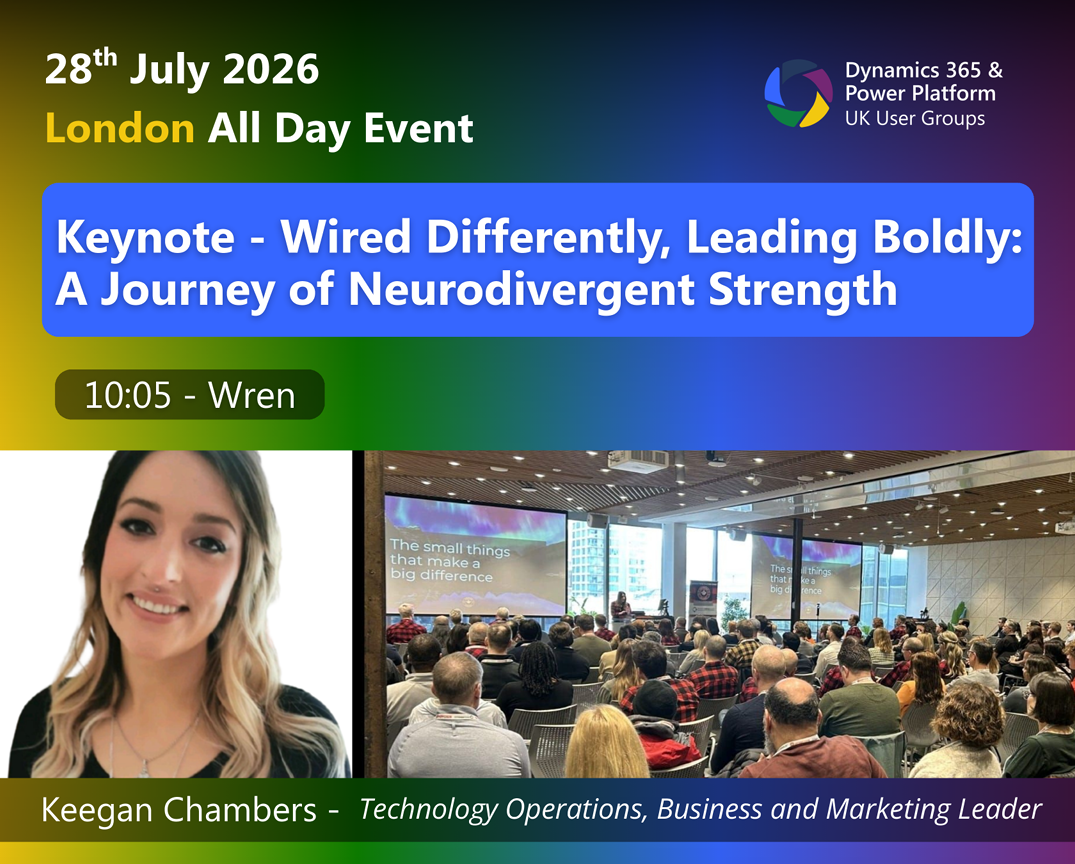
Our Chief Operating Officer, Keegan Chambers, is delivering a keynote session at the all-day London event hosted by the Dynamics 365 and Power Platform User Group.
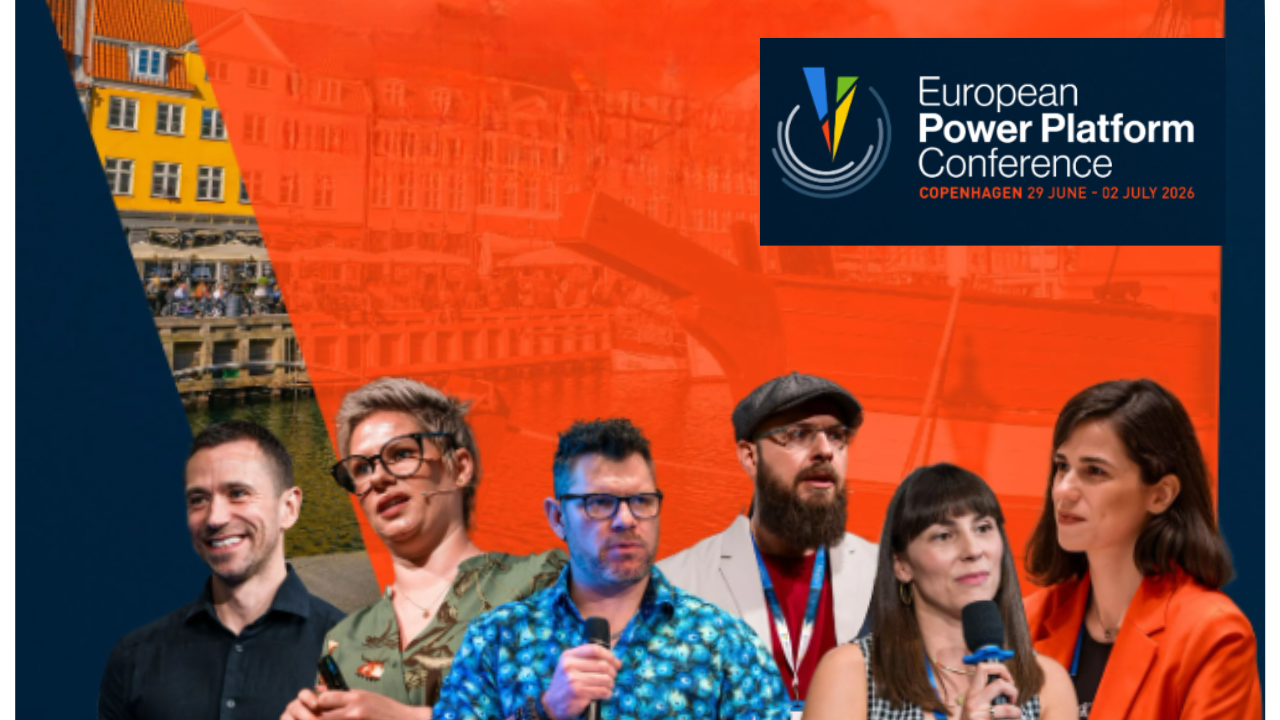
Our Chief AI Officer, Chris Huntingford, is delivering a keynote session at the European Power Platform Summit 2026. With over 2,000 attendees, the event combines in-depth learning, meaningful connections, and inspiration — all set in the vibrant city of Copenhagen.
The Dynamics Minds conference takes place in Slovenia from 25-27 May 2026. A Dynamics 365 and Power Platform community conference, where brilliant minds meet, mingle and share.
Our Chief AI Officer, Chris Huntingford, is delivering the opening keynote for the inaugural East of England Power Platform Summit 2026. The East of England’s flagship conference complete with two days of sessions, workshops, and networking.
Our Chief AI Officer, Chris Huntingford, is delivering a keynote session at STAREAST 2026, TechWell’s premier software testing and quality engineering conference. The event brings together testing professionals, quality leaders, and technology experts for expert-led sessions, practical insights, and meaningful connections — hosted both in person and online from Orlando, Florida.
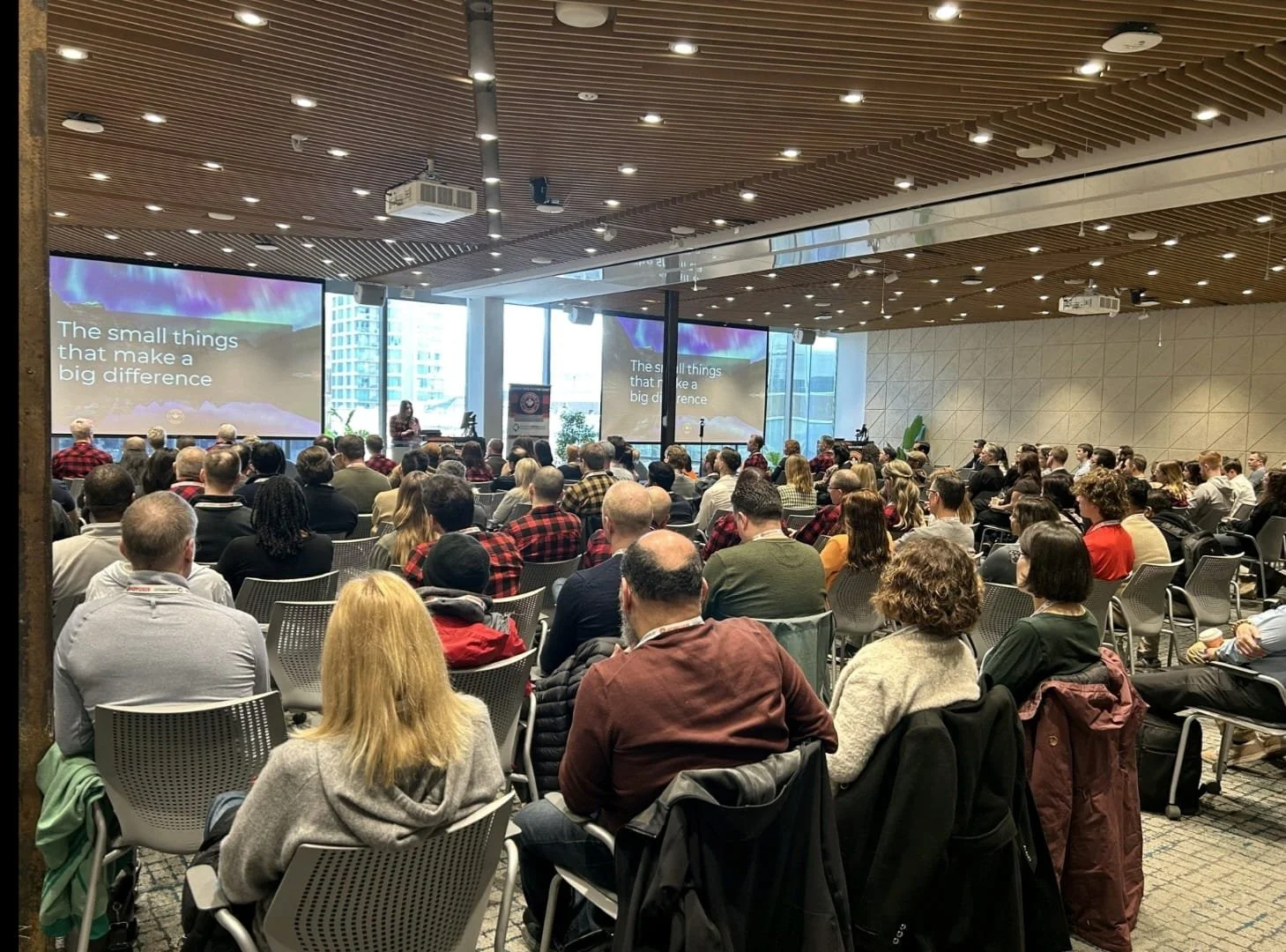
In this powerful and personal keynote, Keegan Chambers, Chief Operating Officer and proud “Mum in Tech,” shares her journey of discovering the strength of neurodiversity through lived experience as both a parent and a technology leader. Keegan reframes neurodivergent traits as leadership strengths that shaped her path to executive leadership. Her talk is a call to action for the tech industry to embrace inclusion, unlock potential through simple accommodations, and lead with empathy, authenticity, and understanding.

We’re excited to announce that our very own Ana Welch will be delivering a LIVE talk at Microsoft Ignite 2025. Ana will be sharing insights on the future of AI Strategy and Governance, showcasing how Centru.ai—our cutting-edge AI Management System—is transforming the way organizations approach artificial intelligence.

The Dynamics Minds conference takes place in Slovenia from 26-28 May 2025! A Dynamics 365 and Power Platform community conference, where brilliant minds meet, mingle and share.
Join the team across all 4 sessions of the Executive Forum series for Microsoft Partners, hosted exclusively by Cloud Lighthouse to light the way on all things Trustworthy AI. Includes insight in becoming the truly strategic AI partner of the future.

We’ve guided the Trustworthy AI journey for organizations in 11 countries. We’ll show you how to shine for your customers, get your next best job, reduce your organization’s risk, and lead the strategy with your C-Suite and board.

Join Mark Smith, Cloud Lighthouse Managing Partner, on 22nd March 2025 at the Canadian Power Platform Summit. Learn how to innovate and adopt with Trustworthy AI across 5 key pillars: strategy and vision, ecosystem architecture, workloads, responsible AI and scaling AI.

Join Ana Welch, Cloud Lighthouse Cloud Strategist and Partner, on 11th February 2025 at the Berkshire Azure user group. Kickstart your journey into Trustworthy AI, learning how to build safer systems for real-world readiness.

The global Power Platform community converges in Las Vegas from 18-20 September 2024 for the Microsoft Power Platform Community Conference! Join Mark Smith, Chris Huntingford, and Andrew Welch together with Dona Sarkar to build your AI strategy with low-code, become an AI extensibility expert with Power Platform, and learn why “free” licensing is not cheaper in the long-run. Join us!

The global Power Platform community converges in Brussels, Belgium 11-13 June 2024 for the European Power Platform Conference! Andrew, Chris, and Ana alongside Capgemini’s Carl Cookson will be there sharing how to Dataverse, Azure data platform services, and adoption best practices help you scale Power Platform across your organization. Join us!
Convergence and integration of technical services are coupling with modern organizational models for accelerating rapid application development to create more and more scenarios where Power Platform and the Azure Data Platform are inextricably linked. Put another way, the data platform has grown ever more sophisticated whilst at the same time solutions developed in Power Platform demand access to more and more enterprise data. This session explores five strategies for integrating these two technology sets in the Microsoft Cloud: Point to Point, Direct to Master Data, Master Data Node, Data Landing Zone, and Modern Data Platform. We’ll consider ideal scenarios, advantages, and disadvantages of each before concluding with real-world examples of organizations who have done this in practice across several industries.

It is as yet unknown if artificial intelligence is more akin to a “great invention” of the 19th and 20th centuries, or if it will ultimately represent another more incremental evolution of existing capabilities. The former—as seems more likely given the immense investments being made today—will present significant challenges to nearly every organization that, having become accustomed to incremental change, is suddenly faced with a “great inventions” caliber paradigm shift that AI seems to portend. Or, as I continue to remind the CIOs with whom I work closely, the grace period for organizations to get their act together and position themselves for the next wave is growing much shorter, the margin for error much more narrow. In this session we will explore AI strategies that are flexible, able to absorb tomorrow what we don’t fully grasp today, strategies that offer value to the organization beyond specific AI-driven workloads because the nature and value of these workloads will remain unclear for some time. We will understand core concepts behind AI acting on enterprise data, present a framework of five pillars upon which future-ready AI strategies are built, and discuss concepts and approaches to mitigate risk in your organization’s AI strategy.
Andrew Welch presented a keynote and facilitated a CIO roundtable at the invite-only AI Applied event, hosted by HSO International (a Cloud Lighthouse partner)… Last year was a stand-out year for AI developments. According to Gartner, generative AI technologies reached the peak of the hype cycle. It's now time to step away from the hype and move towards making practical plans to leverage the power of AI in your organization.

Wave periods between major innovation in the cloud are growing shorter. We no longer have the luxury of waiting it out, of adopting later. Cloud ecosystems built on strategic foundations create the conditions to absorb successive waves of change. This session explored the history of these wave periods and implications that quickening technological innovation hold for global organizations, overviewed the “strategic pyramid” model for activity and system-based value in the cloud, introduced a reference ecosystem map built with ecosystem-oriented architecture, applied this architecture to a UN organizational context, and linked the architecture to a combination of Azure data, Azure AI, and Power Platform technologies.

It is as yet unknown if artificial intelligence is more akin to a “great invention” of the 19th and 20th centuries, or if it will ultimately represent another more incremental evolution of existing capabilities. The former—as seems more likely given the immense investments being made today—will present significant challenges to nearly every organization that, having become accustomed to incremental change, is suddenly faced with a “great inventions” caliber paradigm shift that AI seems to portend. Or, as I continue to remind the CIOs with whom I work closely, the grace period for organizations to get their act together and position themselves for the next wave is growing much shorter, the margin for error much more narrow. In this session we will explore AI strategies that are flexible, able to absorb tomorrow what we don’t fully grasp today, strategies that offer value to the organization beyond specific AI-driven workloads because the nature and value of these workloads will remain unclear for some time. We will understand core concepts behind AI acting on enterprise data, present a framework of five pillars upon which future-ready AI strategies are built, and discuss concepts and approaches to mitigate risk in your organization’s AI strategy.

It is as yet unknown if artificial intelligence is more akin to a “great invention” of the 19th and 20th centuries, or if it will ultimately represent another more incremental evolution of existing capabilities. The former—as seems more likely given the immense investments being made today—will present significant challenges to nearly every organization that, having become accustomed to incremental change, is suddenly faced with a “great inventions” caliber paradigm shift that AI seems to portend. Or, as I continue to remind the CIOs with whom I work closely, the grace period for organizations to get their act together and position themselves for the next wave is growing much shorter, the margin for error much more narrow. In this session we will explore AI strategies that are flexible, able to absorb tomorrow what we don’t fully grasp today, strategies that offer value to the organization beyond specific AI-driven workloads because the nature and value of these workloads will remain unclear for some time. We will understand core concepts behind AI acting on enterprise data, present a framework of five pillars upon which future-ready AI strategies are built, and discuss concepts and approaches to mitigate risk in your organization’s AI strategy.

Non-profits and NGOs the world over are struggling with the shift in cloud technology from activity-based to system-based value. This means that value is shifting from the use of siloed “point solutions” in the direction of architecting strategic foundations and building platform ecosystems—the fabric into which applications, infrastructure, integrations, and the modern data platform is woven. This strategic approach to cloud technology is critical for organizations wishing to become “future-ready”, harness the power of AI, drive down costs, increase operational efficiency, and better serve employees, volunteers, partners, and constituents. In the Microsoft Cloud, workloads are increasingly being built to (a) integrate with one another, (b) integrate with the broader cloud estate, and (c) make use of common building blocks such as core platform services, Azure application and integration services, the “Fabric” modern data platform, and Power Platform. In other words, solutions are being tied together rather than architected in isolation, and this is generating vast datasets built as "single sources of truth". This session will get you thinking like the world's boldest solution and enterprise architects as we explore real-world examples of how organizations are stitching their workloads together into an ecosystem, best practices for doing so, and lessons learned along the way.

Convergence and integration of technical services are coupling with modern organizational models for accelerating rapid application development to create more and more scenarios where Power Platform and the Azure Data Platform are inextricably linked. Put another way, the data platform has grown ever more sophisticated whilst at the same time solutions developed in Power Platform demand access to more and more enterprise data. This session explores five strategies for integrating these two technology sets in the Microsoft Cloud: Point to Point, Direct to Master Data, Master Data Node, Data Landing Zone, and Modern Data Platform. We’ll consider ideal scenarios, advantages, and disadvantages of each before concluding with real-world examples of organizations who have done this in practice across several industries.

Convergence and integration of technical services are coupling with modern organizational models for accelerating rapid application development to create more and more scenarios where Power Platform and the Azure Data Platform are inextricably linked. Put another way, the data platform has grown ever more sophisticated whilst at the same time solutions developed in Power Platform demand access to more and more enterprise data. This session explores five strategies for integrating these two technology sets in the Microsoft Cloud: Point to Point, Direct to Master Data, Master Data Node, Data Landing Zone, and Modern Data Platform. We’ll consider ideal scenarios, advantages, and disadvantages of each before concluding with real-world examples of organizations who have done this in practice across several industries.

Join Microsoft cloud expert Andrew Welch on a journey to discover the digital building blocks for creating a platform-first law enforcement approach. One that enables UK Police forces to benefit from advances in technology, but that enables rapid and cost-effective deployment of connected applications. Hear also how the MET Police resolves Grey IT challenges using this innovative approach.
It is as yet unknown if artificial intelligence is more akin to a “great invention” of the 19th and 20th centuries, or if it will ultimately represent another more incremental evolution of existing capabilities. The former—as seems more likely given the immense investments being made today—will present significant challenges to nearly every organization that, having become accustomed to incremental change, is suddenly faced with a “great inventions” caliber paradigm shift that AI seems to portend. Or, as I continue to remind the CIOs with whom I work closely, the grace period for organizations to get their act together and position themselves for the next wave is growing much shorter, the margin for error much more narrow.

Workloads in the Microsoft Cloud are increasingly being built to (a) integrate with one another, (b) integrate with the broader enterprise application and data system, and (c) make use of common building blocks such as core platform services, Azure data, application, and integration services, and Power Platform. On the latter, the most successful organizations are now using Power Platform to build ambitious, high value solutions. In other words, solutions are being tied together rather than architected in isolation, and this is generating vast datasets built as "single sources of truth".

Organizations using Microsoft Cloud are integrating their workloads with each other, broader enterprise applications, and common building blocks like core platform services, integration services, data solutions, and Power Platform. Successful organizations are using Power Platform to build high-value solutions that tie different solutions together, generating large datasets as “single sources of truth”. This session will explore real-world examples of how organizations have integrated their workloads into an ecosystem, best practices, and lessons learned, inspiring attendees to think like the world’s boldest solution and enterprise architects.

I have come to understand strategic thinking as more art than science. Strategy is surely informed in part by data, but I find that our society in general and the technology industry specifically too often confuse data and wisdom, that we foolishly (though understandably) seek heuristics or processes so that we can turn the art of strategic thinking into a game of color by numbers so simple that anyone can do it. When it comes to strategic thinking, better that we seek methods of framing our thoughts rather than shortcuts to the answers themselves. This session offers practical approaches to injecting strategy into your organization’s Microsoft Cloud journey, indeed, a selection of the same approaches I take with my clients. We explore a wide range of topics, including the impact of AI on the strategic landscape, how organizations have ever-decreasing time to absorb waves of innovation into their operating models, the transition from activity-based to system-based value, and how governance fits. We’ll then investigate a model for weaving strategic intent into the ongoing cloud journey, and explore industry-specific ecosystem maps that illustrate how other organizations have found success doing this.

Workloads in the Microsoft Cloud are increasingly being built to (a) integrate with one another, (b) integrate with the broader enterprise application and data system, and (c) make use of common building blocks such as core platform services, Azure data, application, and integration services, and Power Platform. On the latter, the most successful organizations are now using Power Platform to build ambitious, high value solutions. In other words, solutions are being tied together rather than architected in isolation, and this is generating vast datasets built as "single sources of truth". This session will get you thinking like the world's boldest solution and enterprise architects as we explore real-world examples of how organizations have knitted their workloads together into an ecosystem, best practices for doing so, and lessons learned along the way.

Power Platform solutions are increasingly being built to integrate with one another and with the larger enterprise application and data ecosystem, and the most successful organizations are using Power Platform to build ambitious, high-value solutions. In other words, solutions are being tied together rather than architected in isolation, and this is generating vast datasets built as "single sources of truth". This session will get you thinking like the world's boldest solution and enterprise architects as we explore real-world examples of how organizations have knitted their workloads together into an ecosystem, best practices for doing so, and lessons learned along the way.
2022
🇬🇧 UK User Group (November)
🇬🇧 South Coast Summit
🇧🇪 Belgian PowerTalk
🌎 Migration Minded with Microsoft
🇬🇧 UK User Group (June)
🏴 Scottish Summit
🌍 Power Platform School
2021
🇳🇿 Power Platform Show (podcast)
🇮🇪 Power Platform User Group Ireland
🌍 Power Platform Virtual Happy Hour
🏴 Virtual Scottish Summit
🇬🇧 South Coast Cloud User Group
🇬🇧 Microsoft Biz Apps @ Speed
2020
🏥 Healthcare 365 Summit
🇬🇧 Power Platform User Group London
🌍 CDS Saturday
🇺🇸 Power Platform Summit North America
🇬🇧 Power Platform School
🇪🇺 European SharePoint Community
🇪🇺 Power Platform Summit Europe
🌎 Virtual Power Platform World Tour
🌎 Microsoft Business Apps Summit
🌎 Virtual Hack4GoodMBAS Hackathon
🇳🇿 MVP Show Podcast
🇺🇸 Power Platform World Tour DC
🏴 Scottish Summit
🇺🇳 United Nations Tech Innovation Day
🇬🇧 Super Power Saturday London
🇺🇸 Microsoft Tech Expo - Portland
🇧🇪 Power User Days Belgium
2019
🇺🇸 Microsoft Ignite
🇮🇪 Power Platform World Tour Dublin
🇦🇹 Power Platform World Tour Vienna
🇺🇸 Power Platform Summit North America
🇸🇪 Power Platform Saturday Sweden
🇬🇧 Power Platform User Group London
🇺🇸 365 Saturday DC
🇨🇦 Power Platform World Tour Toronto
🇬🇧 Power Platform World Tour London
🇳🇿 Business Applications Podcast
🇺🇸 Microsoft Inspire
🇺🇸 Microsoft Business Applications Summit
🇺🇸 Hack4Good Charity Hackathon
🇺🇦 365 Saturday Ukraine
🇦🇪 365 Saturday Dubai
🇺🇸 Power Platform World Tour Chicago
🇺🇸 Power Platform World Tour DC
🇺🇸 Microsoft Cloud Symposium