
Microsoft Ignite is Microsoft’s flagship annual conference, bringing together technologists, IT leaders and partners from around the world to explore the latest in AI, cloud, security and business applications. This year’s event runs from 17 to 20 November 2026 at the Moscone Center in San Francisco, with a free digital pass for anyone joining online.
👉🏼 Session Materials (post event)
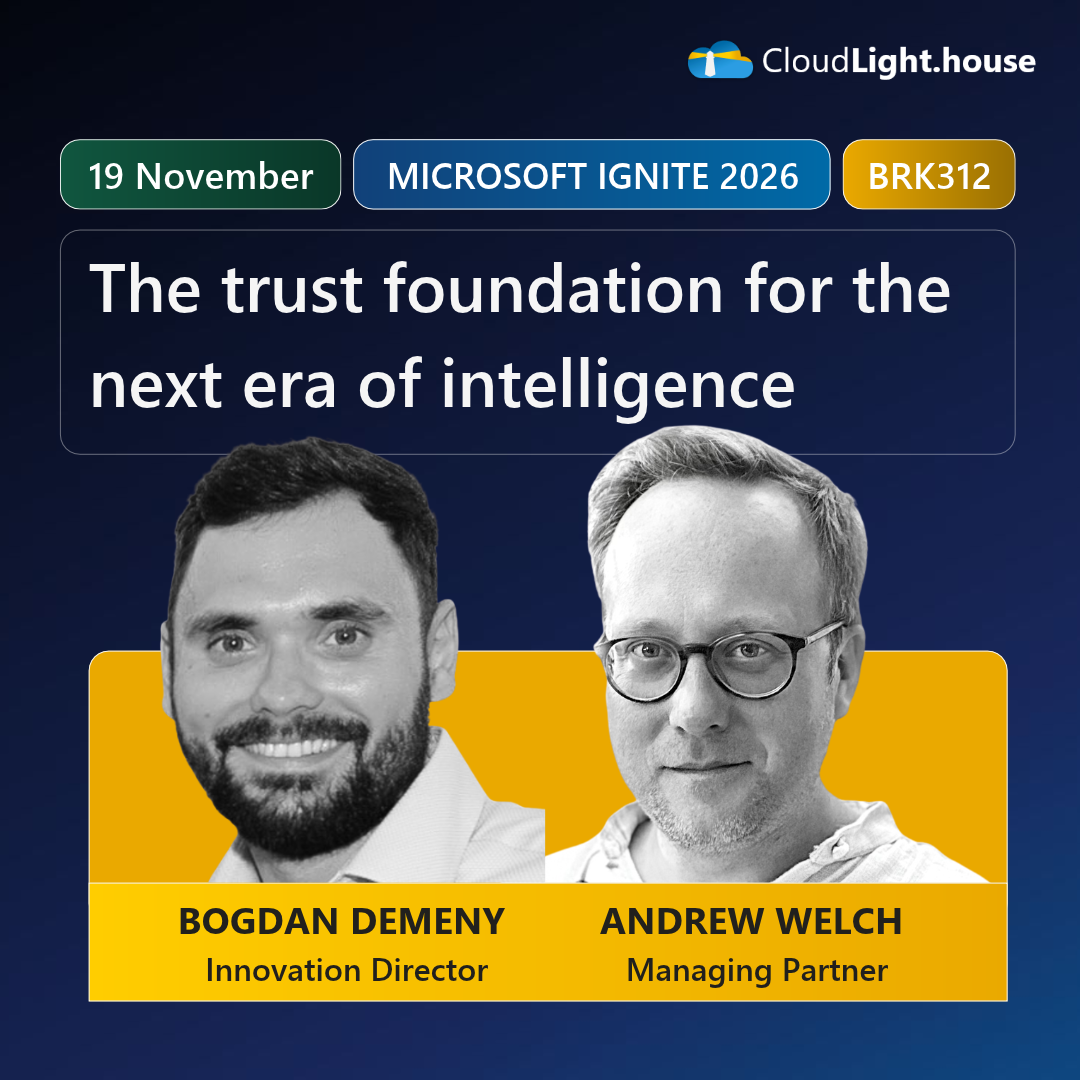
The trust foundation for the next era of intelligence (BRK312)
Chris Huntingford, Chief AI Officer @ Cloud Lighthouse
Bogdan Demeny, Innovation Director @ Cloud Lighthouse
Sarah Bird, CPO Responsible AI @ Microsoft
Mohammad Abuomar, Chief Software Architect @ Microsoft
📅 Wednesday 18 November, 4:15 – 5:00 PM PT
📍 Moscone Center, San Francisco, and online
AI agents can now reason, work together and take action across business systems. As they become more autonomous, trust stops being a nice-to-have and becomes the infrastructure that allows innovation to scale safely. In this session, Microsoft sets out its vision for the next generation of Responsible AI, covering policy and oversight through to security, transparency and accountability, and shows how organizations can unlock the value of agentic AI while staying firmly in control.
Cloud Lighthouse joins the session to share a real-world story: how we are using Microsoft’s ASSERT evaluation tooling alongside Centru.ai, our AI management platform, to build, test and govern an AI agent for clients. It’s a practical look at what Trustworthy AI means once an agent leaves the lab and goes to work.
Trustworthy AI sits at the heart of everything we do at Cloud Lighthouse and the Center for Trustworthy AI: the meeting point of engineering best practice, human ethics and legal regulation.
Join us to see how that thinking translates into agents organizations can confidently put in front of their people and customers.
